
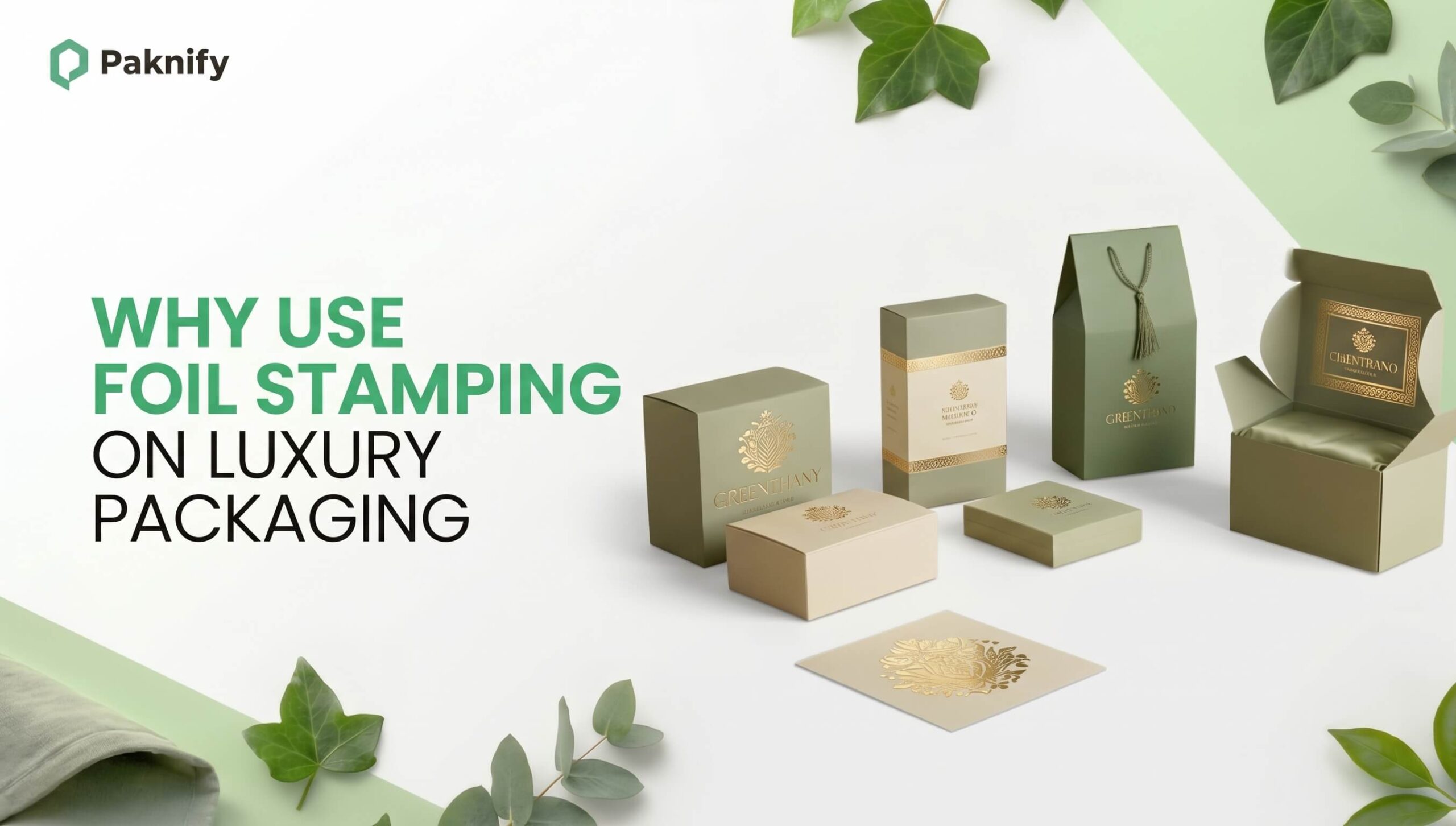
Foil stamping is not intended to cover the whole of a box with a metallic finish. It is usually used in a selective manner to draw attention to key design features.
Gives a Premium Appearance
The reflective effect achieved through the use of metallic foil. It cannot be replicated in the same way by conventional printing methods. A logo which is simple in itself can turn into a striking visual element when it is finished with gold or silver foil.
Strengthens Brand Identity
A steady use of foil in branding can contribute to the packaging identity of a company. For example, the company might apply gold foil to its logo on gift boxes, product cartons, labels, and presentation packaging.
Improves Shelf Visibility
Reflective surfaces change in response to variations in lighting and to the angle from which they are viewed. This effect can be used to draw attention to certain features of the packaging in a retail setting.
Adds Tactile Interest
If foil is used with embossing or debossing, then the package will have both a visual and a physical dimension. The outcome is not merely a printed graphic since customers are able to see and feel the finished detail.
Compatible with minimalist designs
Foil needn’t have an elaborate design. For instance, a box which is matte black and has a small metallic logo can appear refined without the artwork becoming complicated.
Popular Foil Options for Packaging
Foil finishes create different visual effects. Choose the finish based on the packaging material, brand identity, and desired look.
Gold Foil Stamping
Gold Foil Stamping is generally linked with high-end packaging. It is especially effective when used on jewellery, cosmetics, perfumes, confectionery, gifts, and special-edition products. Gold may be used on logos, typography, borders, patterns, or as part of minor decorative details.
Silver Foil Stamping
Silver gives a more metallic, cooler look and can be used to go with technological, monochromatic, or minimalist packaging.
Rose Gold and Copper
Rose gold and copper have a warmer metallic look. They are useful for use in beauty, fashion, gifting, and lifestyle packaging in cases.
Holographic Foil
The visual effects of holographic foil vary with the angle at which it is viewed. It is suitable for use in decorative packaging, for promotional editions, and for any designs that need a more dynamic look.
Pigmented and Matte Foils
It is not necessary for every foil to have a highly reflective appearance. Pigmented and matte types can achieve solid colors or more subtle finishes. At the same time, they offer the special features of foil application.
Foil Stamping vs. Embossing
Foiling and embossing are separate finishing methods. But they can be very effective when used together.
Foil stamping mainly provides color, a reflective effect, and surface decoration. Embossing lifts certain artwork above the substrate, whereas debossing produces a depressed impression.
If you combine the two, you can achieve packaging in which the metallic logo is also raised or recessed. This method is often used in the case of premium branding. It provides both visual contrast and a three-dimensional effect.
For example, embossed pillow boxes may have gold foil applied to the raised brand name. Kraft embossed boxes can combine the natural texture of the paper with a modest metallic touch.
Packaging Materials Suitable for Foil
Foil stamping may be applied to a wide range of packaging materials. As long as the surface and board structure are suitable for the process. Common options include:
- Coated paperboard
- Uncoated paperboard
- Specialty papers
- Kraft paper and board
- Folding cartons
- Rigid box wraps
- Gift packaging
- Labels and tags
A smooth and stable surface on the paperboard usually results in a clearer foil definition. Although textured or natural materials can be used. It is necessary to test their surface properties before carrying out full production.
Hot Stamp Paperboard Boxes for Premium Products
Hot Stamp Paperboard Boxes are very appropriate for brands. It helps to combine structural protection, printed graphics, and a premium finish. Paperboard boxes can be made to have custom dimensions and then have foil applied to certain areas. According to the packaging design, foil can be applied to:
- Brand logos
- Product names
- Decorative borders
- Icons
- Patterns
- Limited-edition messages
- Small callouts
Foil can also be used in a selective manner to help manage visual complexity. Rather than covering the entire package the brand can use metallic accents as a focus.
Combining Foil with Other Finishes
Foil stamping becomes even more versatile when it is combined with other packaging finishes. Each extra finishing process should serve a definite design purpose.
Foil and Embossing
It gives the design a metallic appearance and a three-dimensional quality. Especially when used for logos and high-end typography.
Foil and Matte Lamination
A non-glossy surface offers a quiet background. It makes the metallic foil stand out more clearly. This contrast is often employed in luxury packaging.
Foil and Spot UV
Custom Spot UV folders and packaging can include selective gloss areas to create a contrast with matte or uncoated surfaces. The foil being saved for the most important branding elements.
Foil and Kraft
Kraft packaging has a natural and organic look. By using a thoughtfully chosen metallic foil it is possible to produce an interesting contrast between the rustic base material and the high-end branding. This feature is especially beneficial when it comes to Kraft embossed boxes and special gift packaging.
How to Design Packaging for Foil Stamping?
The right kind of cold foil stamping starts with the artwork and not with the production machine. So designers must decide which features actually gain from the finish.
Keep Important Details Clear
Care must be taken when dealing with small text and detailed graphics. The consistent reproduction of very fine artwork depends on the die, the substrate, and the production specifications.
Use Contrast Strategically
Foil works best when there is enough contrast with the packaging underneath. For instance, gold on a dark matte background gives a different effect to gold on a light glossy surface.
Avoid Overusing Metallic Effects
Applying foil to each and every element can have the effect of reducing its visual impact. A better method would be to use foil on the logo, the product name, or just one main decorative feature.
Test the Actual Material
It is impossible for a digital proof to fully show the reflective properties of real foil. Only by using a physical sample with the intended board and finish can problems with adhesion, registration, texture, and the overall appearance. It can be detected before mass production.
Is Foil Stamping Environmentally Friendly?
The environmental aspects will vary according to the full packaging specification. This comprising the board, the coatings, the foil construction, the production process, and the end-of-life recycling system.
Foil stamping should not simply be labelled as either universally sustainable or universally unsustainable. If companies wish to improve the recyclability of their packaging, they should talk to their packaging supplier about the particular type of foil. They should then check whether the final product suits their desired recycling process.
A thoughtful packaging strategy should include careful material selection, responsible production, and the avoidance of unnecessary decorative elements.
Foil Stamping and Other Printing Finishes
Foil stamping serves a specific function in packaging production. Ordinary ink printing is usually more suitable for photographs, gradients, large areas of color, and detailed full-color artwork. Foil stamping is the better choice when the design calls for a metallic sheen or a special kind of finish.
At the same time, spot UV produces a selective gloss rather than a metallic finish. Embossing alters the physical profile of the substrate, whereas foil mainly affects the appearance of the surface.
The techniques may be used on their own or together, depending on the aims of the packaging.
Art of Creating Premium Packaging with Lasting Impact
Foil stamping creates distinctive details for packaging. They use a combination of controlled heat, pressure, special tooling, and specialty foil. Its value lies in the way it is applied rather than in adding as much metallic decoration as possible.
From Gold Foil Stamping to foil-and-emboss combinations, the technique can adapt to different brand identities and packaging structures. Selecting the right foil, board, artwork, and complementary finish is essential for achieving a clean and consistent result.
For brands developing premium packaging, a physical prototype is an important step before production. It allows the design team to evaluate the actual metallic effect, surface interaction, tactile quality, and overall balance of the finished package.
Bring Your Brand into the Spotlight with Custom Foil-Stamped Packaging
Design your packaging to match your brand’s quality and identity by using custom foil stamping. Perfect finishing can transform a simple box into a memorable brand experience. Choose the desired packaging solution with custom foil stamping to enhance your product presentation.
If you’re ready to give your product a premium free, Paknify is the best custom packaging option available. We design your packaging with a premium finish that lasts in customer’s mind for longer.